03-Library Database Exercise 2 - 10 More SQL Questions and Answers (Video in Khmer)
Practice 10 more SQL queries using Library Database with COUNT, GROUP BY, HAVING, and Subqueries. Includes SQL query answers and video tutorial in Khmer.
2026-08-22 · 4 min read
Hello my friend! Welcome to Library Database Exercise 2! Today we practice writing more SQL SELECT queries together. This lesson has a bit more advanced query like COUNT(), GROUP BY, HAVING, and Subquery!
If you not create database or not practice Exercise 1 yet, please check here first:
👉 Library Database Example - Create Tables with Data Download
👉 Library Database Exercise 1 - 10 SQL Questions and Answers
👉 Library Database Exercise 2 - 10 More SQL Questions and Answers
👉 Library Database Exercise 3 - 5 Advanced SQL Questions and Answers
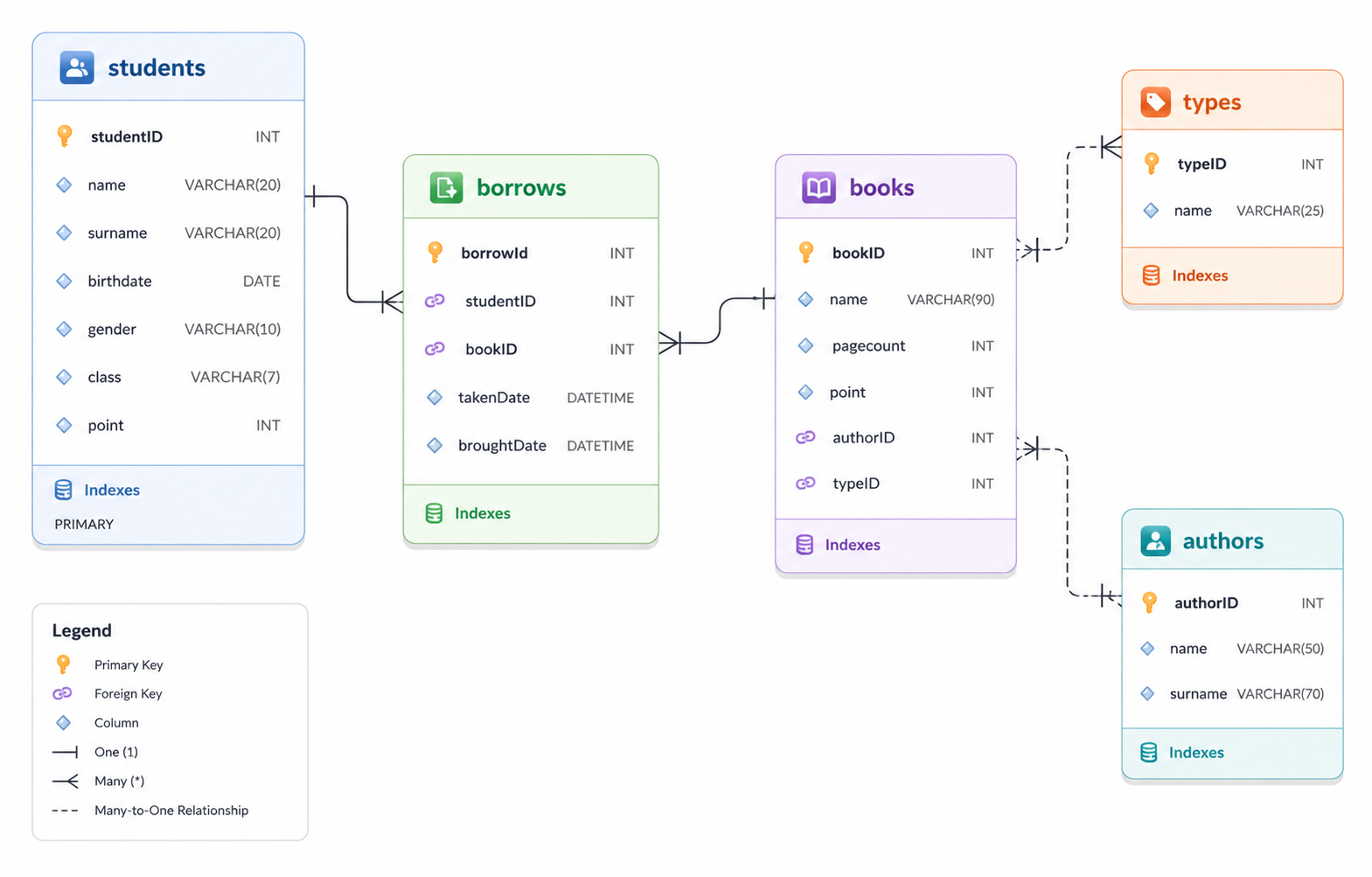
📐 ERD Diagram Reference
Here is the ER Diagram of our Library Database to help you see how tables connect:
📝 How to Practice:
- Read each question carefully.
- Try write SQL query by yourself in MySQL Workbench first!
- Then check answer code below to verify your result.

Part 1: Questions 1 to 5 (COUNT, GROUP BY & HAVING)
Question 1: Show total number of books and set column title alias as 'Total Book'
SELECT COUNT(*) AS 'Total Book'
FROM books;
Question 2: Show total number of books which have page count 200 and above
SELECT COUNT(*) AS 'Total Book'
FROM books
WHERE pagecount >= 200;
Question 3: Show student name and count for students who borrowed books more than 30 times (JOIN, GROUP BY, HAVING)
SELECT s.name, COUNT(b.studentID) AS Counts
FROM students s
INNER JOIN borrows b ON s.studentID = b.studentID
GROUP BY s.name
HAVING Counts > 30;
Question 4: Show total number of books borrowed in year 2016
SELECT COUNT(*)
FROM borrows
WHERE YEAR(takenDate) = 2016;
Question 5: Show total number of books borrowed in each year
SELECT YEAR(takenDate) AS Years, COUNT(*) AS Counts
FROM borrows
GROUP BY Years;
📺 Watch Video Tutorial for Questions 1 to 5
This video explain step-by-step solution for Questions 1 to 5 in Khmer language:
Part 2: Questions 6 to 10 (Subqueries & Aggregation)
Question 6: Show total number of unique students who borrowed books
SELECT COUNT(DISTINCT studentID)
FROM borrows;
Question 7: Show all student information who NEVER borrowed any book (Subquery with NOT IN)
SELECT *
FROM students s
WHERE s.studentID NOT IN (
    SELECT studentID FROM borrows
);
Question 8: Show total number of books with type 'Comics' (using INNER JOIN)
SELECT COUNT(*)
FROM books b
INNER JOIN types t ON b.typeID = t.typeID
WHERE t.name = 'Comics';
Question 9: Show total number of books with type 'Comics' (using Subquery)
SELECT COUNT(*)
FROM books
WHERE typeID IN (
    SELECT typeID FROM types WHERE name = 'Comics'
);
Question 10: Show book type name and total book count in each type
SELECT t.name, COUNT(b.typeID) AS Counts
FROM types t
INNER JOIN books b ON t.typeID = b.typeID
GROUP BY t.name;
📺 Watch Video Tutorial for Questions 6 to 10
This video explain step-by-step solution for Questions 6 to 10 in Khmer language:
💡 Tip for Advanced SQL: When filtering aggregated results (like
COUNT(*) > 30), you CANNOT useWHEREclause! You MUST useHAVINGclause afterGROUP BY! Remember:WHEREfilters rows before grouping,HAVINGfilters results after grouping!